Pressure Independent Control Valves (PICV)
In a chilled water system, flow through each coil changes as other valves open and close. A conventional control valve is affected by those pressure changes, so the flow can drift away from the design value and the system needs manual balancing.
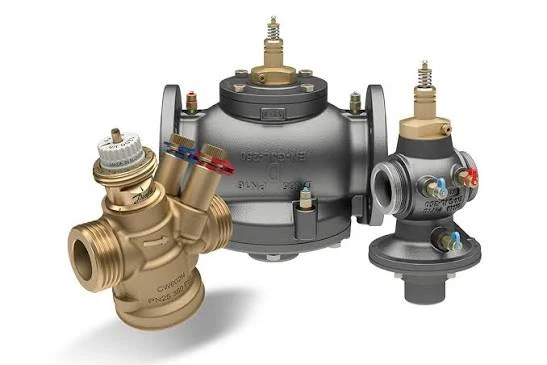
A pressure independent control valve (PICV) combines a balancing function, a differential-pressure regulator and a control valve in one body. It holds the set flow whatever the pressure in the pipework does, so each coil gets what it needs. MEPTECH supplies PICVs for chilled and heating water projects. Send us the flow data and we will help with selection.
PICV Options
Small-bore PICVs
For fan coil units, chilled beams and small terminal units with low flow rates.
Large-bore PICVs
For air handling unit coils and branch connections that carry higher flow.
On/off, floating and modulating actuators
The actuator is chosen to match the control system: simple open/close, 3-point floating, or a modulating signal such as 0–10 V.
Threaded and flanged connections
Connection type follows the pipe size and the project specification.
Why Specify PICVs
- Flow is set by the valve, so coils are not over- or under-supplied when system pressure changes
- Less manual balancing, which simplifies commissioning
- Helps maintain the intended temperature difference across the coil, supporting chiller efficiency
- Can reduce pump energy compared with an unbalanced system
- Sized by the required flow, not by a calculated pressure drop
- Fewer components to install than a separate balancing valve and control valve
Where PICVs Are Used
- Fan coil units in offices, hotels and residential towers
- Air handling unit chilled and hot water coils
- Chilled beams and radiant systems
- District cooling connections and plant rooms
- Variable-flow chilled and heating water systems
How We Help You Choose
1. Share the flow data
Send the design flow for each coil, the pipe size and the type of terminal unit.
2. Choose valve and actuator
We recommend the valve size, the connection type and an actuator that matches your control signal.
3. Quotation and supply
You receive a quotation with the technical data for the selected valves.
Frequently Asked Questions
Need help choosing the right size or model?
Send us your project requirements or drawings and our team will recommend a suitable option and prepare a quotation.